Friday Flyer - June 5, 2026
Spotlight on Summer 2026...A Look Ahead
Summer 2026 is shaping up to be another exciting and active season for QuarkNet! Many of our 50+ centers across the country are planning to host workshops and meetings, several featuring National Workshops presented by QuarkNet Central. Not sure when your local center’s events are scheduled? Reach out to your mentor, lead teacher, or a QuarkNet staff member to get connected.
This summer’s opportunities include Data Camp at Fermilab (July 12-17) and the virtual Coding Camp 1 (June 29–July 3). Later in July, University of Notre Dame will host a CMS Open Data Workshop; see the News section below for additional details. The summer also features the annual AAPT Summer Meeting, taking place July 19–22 in Pasadena, CA.
As the school year comes to a close, this will be the final Friday Flyer of the 2025–2026 academic year. Thank you for all you do to bring contemporary physics and scientific discovery into your classrooms. We wish you a productive, rewarding, and relaxing summer. We also look forward to working with many of you at a QuarkNet workshop or camp in the next few months!
Image
News from QuarkNet Central
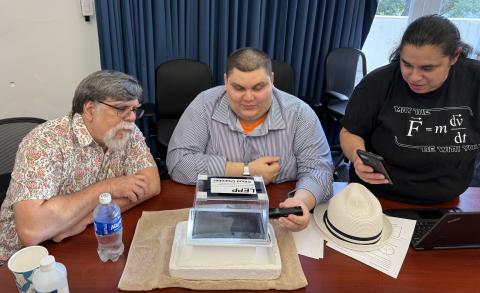
CMS Open Data Workshop: There will be a CMS Open Data Workshop with a special emphasis on pedagogical uses at Notre Dame this summer, July 28-30. Teachers can participate in person or online (there is some limited travel funding) or whole centers can meet on those days and participate remotely with mentor assistance: that would make for a pretty great center workshop! Details, including a registration link, can be found here.
Beamline for Schools (BL4S) 2026 Winners: The winners of the 13th edition of the BL4S competition were recently announced. Students from the five winning teams, including a team from the US, will have the opportunity to carry out their proposed experiments at CERN or a partner institute. A big congratulations to the winning teams, and all involved!
Physics Experiment Roundup
At Fermilab, researchers are leveraging artificial intelligence (AI) to drastically accelerate the design of custom chips for extreme environments.
Meanwhile, CERN researchers announced the first observation of the excited Bc*+ meson, adding another member to the growing family of particles discovered at the Large Hadron Collider and providing new opportunities to study the strong nuclear force. Additional CERN highlights include precision measurements of antimatter, a low-energy run at LHCb, and ongoing accelerator upgrades that are expanding the laboratory’s scientific reach.
Resources
Perimeter offers several online, asynchronous teacher courses including Teaching Quantum Wave-Particle Duality, Teaching Particle Physics and several others. Learn more, including how to register, at their Educator Courses for Teachers page.
For teachers who are working on curriculum development over the summer, keep in mind that Perimeter Institute has many free resources, including lesson plans, simulations, in addition to the professional development opportunities mentioned above. The QuanTime website has links to several activities that explore quantum concepts, and of course there is our very own Data Activities Portfolio with over 40 activities available.
The NCSM has come out with "Educational Technology & AI Guidance for Math Leaders." Though the title specifically refers to math educators, the guide is very applicable to science education as well.
Just for Fun
We'll start the "fun" with Neutrino Project from xkcd.
And we'll end with a few ideas for "summer fun" that may come in handy next fall when school begins again.
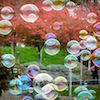
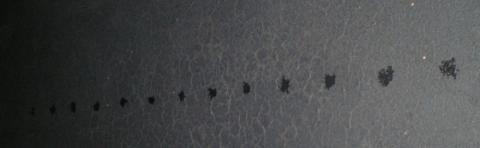
- Physics "photo challenge": Turn your summer adventures into a physics scavenger hunt. Snap photos that illustrate concepts such as momentum, waves, optics, circular motion, or energy transfer. Use these pictures with your students next year! (See example below.)
- Concept in a text: Challenge yourself to explain a complex physics concept (quantum tunneling, neutrino oscillations, or antimatter) in 50 words or fewer. Bonus points if a non-physicist can understand it! Have these on hand as examples to use with your students next year, or have your students write their own next fall based on your examples.
- QuarkNet-themed:
IfWhen you're attending a QuarkNet workshop, Data Camp, or Coding Camp this summer, keep track of the most surprising physics fact you learn. Share it with your students in the fall as a "What I Did this Summer," physics edition.
Image
Image
QuarkNet Staff
Mark Adams: markradams74@gmail.com
Ken Cecire: kcecire@nd.edu
Spencer Pasero: spasero@fnal.gov
Shane Wood: swood5@nd.edu
Groups audience